
Inspiration
Thames foreshore, Chelsea bridge
After AD50
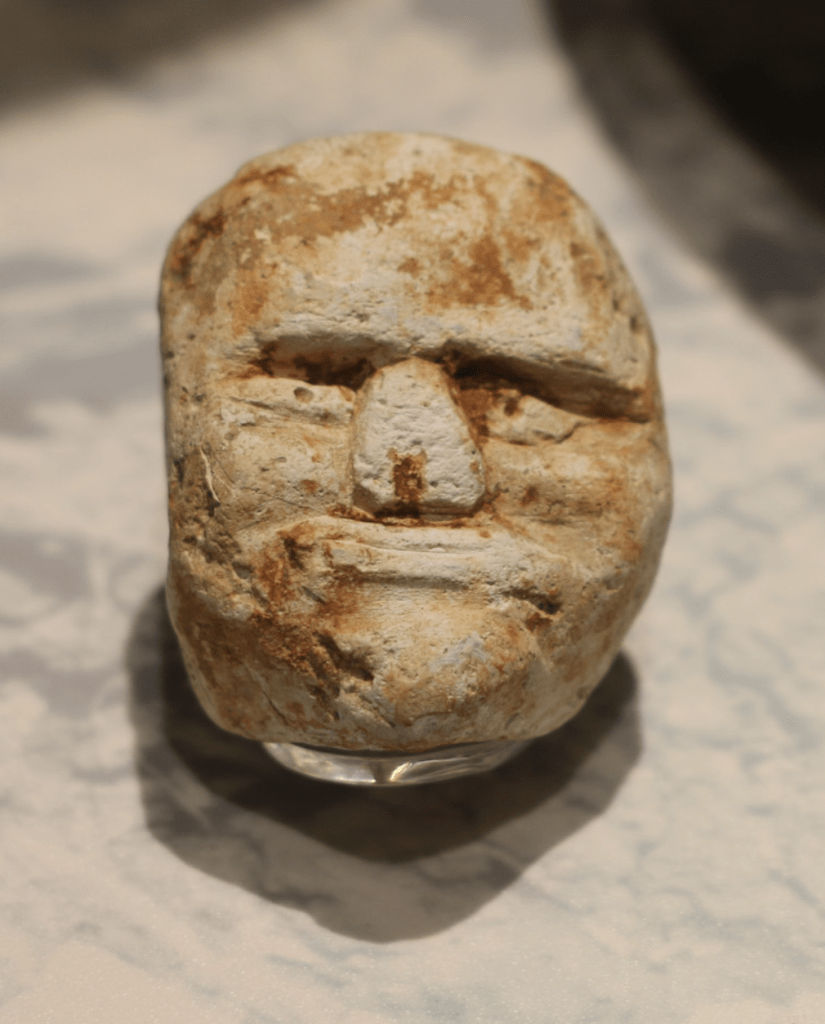
Museum of London description – A number of earlier customs appear to have been kept up in the new Roman settlement of Londinium. The use of human heads as ritual objects was one of them. Skulls were placed in the Walbrook Stream and in pits and wells. Representations of human heads were carved in stone and presumably wood, although none of these have survived.
1st – 2nd century
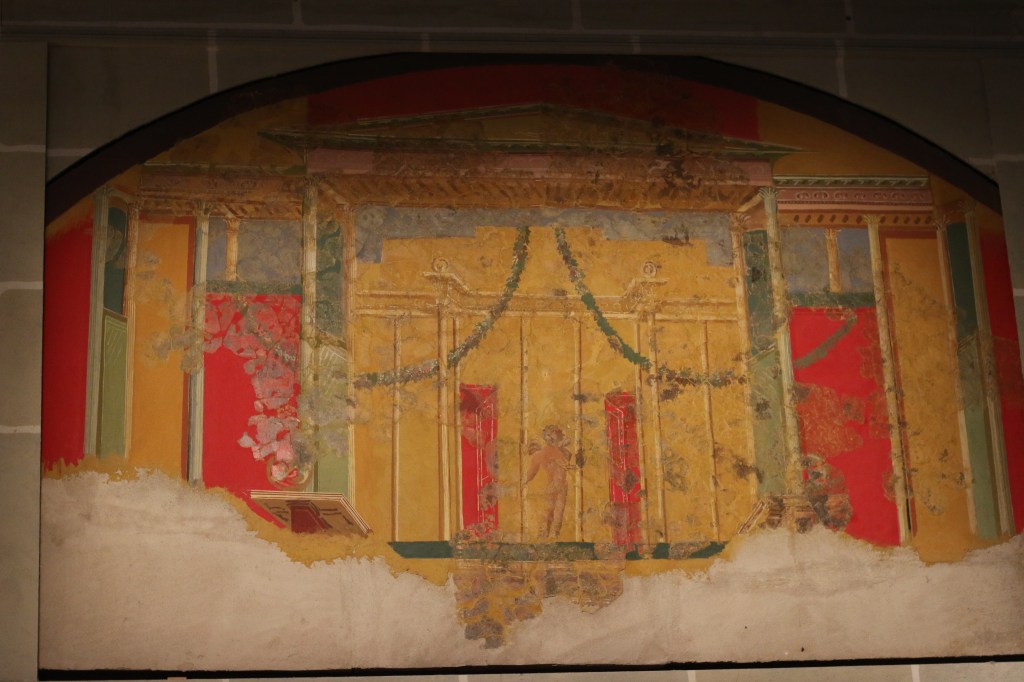
Late first century
Museum of London description – The wall painting came from one of the rooms in the baths. It dates from the middle of the 2nd century. This wall was subsequently replastered and painted. When the building was demolished in the 4th century, the plaster fell face down and the fragments lay undisturbed in a medieval garden until the archaeologists discovered them in 1983.
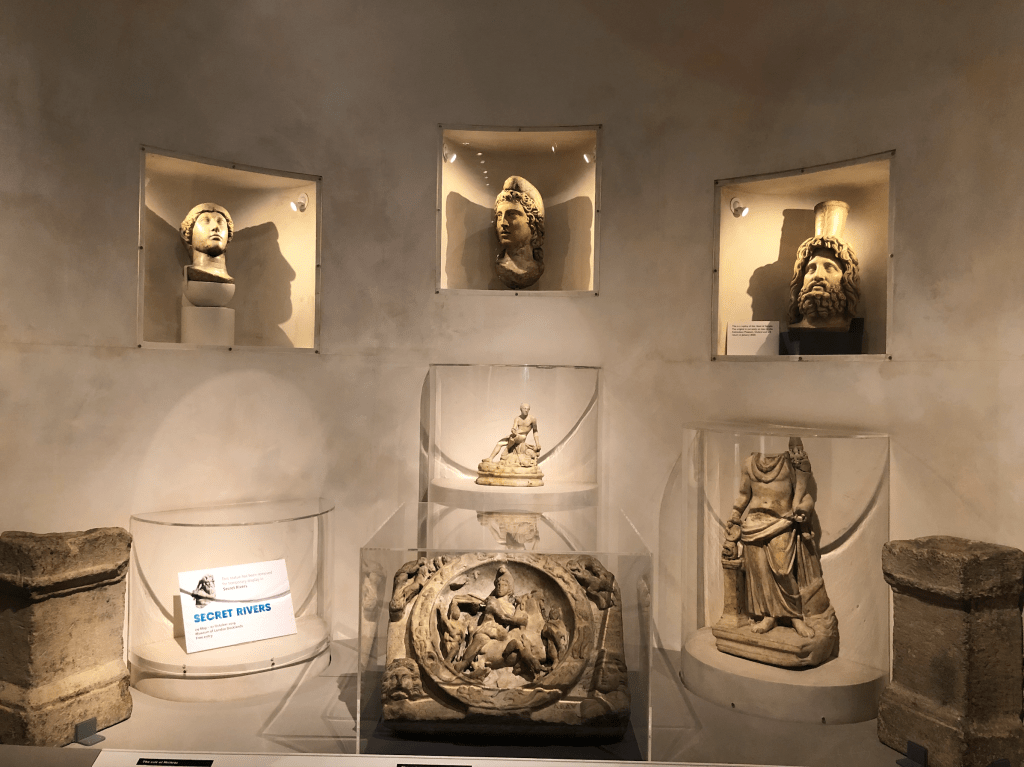
Museum of London description – Between 240 and 250 a temple was built on the east bank of the Walbrook stream in the heart of the City. It was dedicated to the mysterious cult of the god Mithras. After about 100 years the temple was rebuilt and may have been rededicated to the Bacchus. It was later abandoned. It is the only temple from the Roman London which has been positively linked to a particular cult or deity. The temple was discovered in 1952 by Professor W F Grimes. It was only identified as a temple dedicated to the Mithras in 1954, when the head of Mithras (right, top centre) was found on the last day of the scheduled excavation.
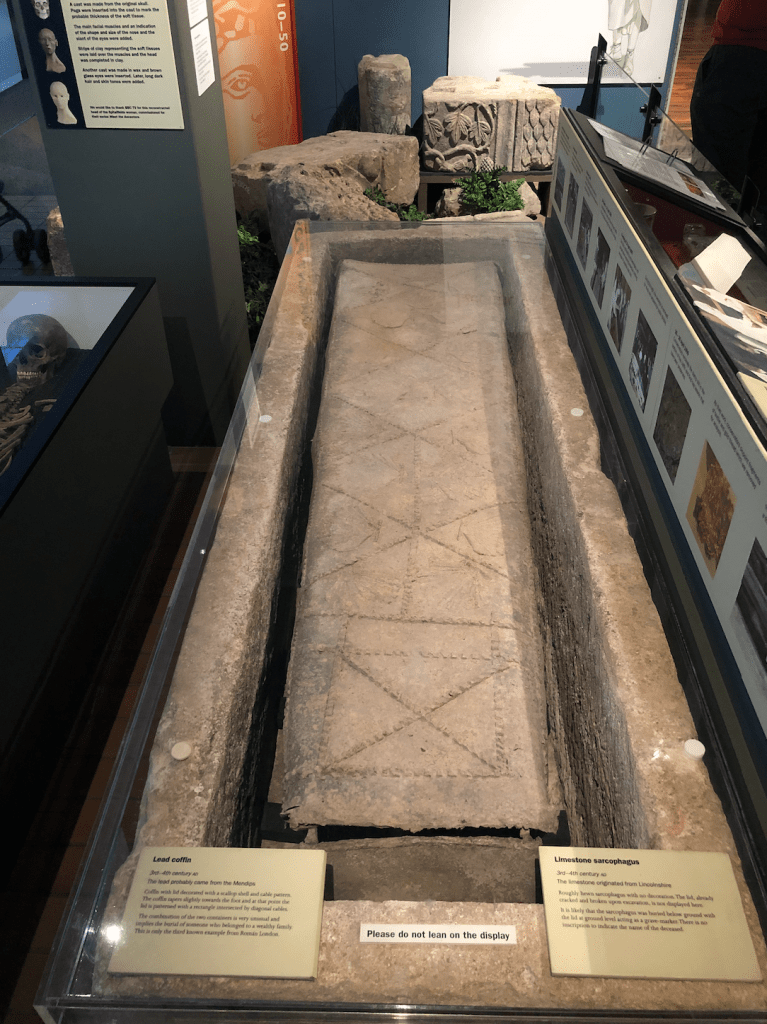
Lead coffin, 3rd – 4th century AD 
Skeleton of a woman in the coffin
Museum of London description – Coffin with lid decorated with a scallop shell and cable pattern. The coffin tapers slightly towards the foot and at that point the lid is patterned with a rectangle intersected by diagonal cables. The combination of the two containers is very unusual and implies the burial of someone who belonged to a wealthy family. This is only the third known example from Roman London.
There is no evidence for her (the skeleton of a woman) cause of death but, aged between 18 and 25, she is younger than most adult females found in Roman cemeteries in London. Lines in six teeth show the growth of her tooth enamel was interrupted during childhood. There are many possible causes for this; she may have been very ill for a time when she was growing up. Ancient DNA analysis revealed that her ancestors came from western and central Europe and she had light brown hair. Chemical analysis of her teeth showed she spent her childhood in Rome itself. From a forensic study of her skull we know she had White European ancestry.
Yash – It is really interesting to see how graves can tell us so much about a person. Being a Hindu, we cremate the bodies that have passed, leaving nothing behind. Thus, for me, graves are like a memory, almost photograph like. It can conjure up an image and a life for the person even though we may have no idea who they are.
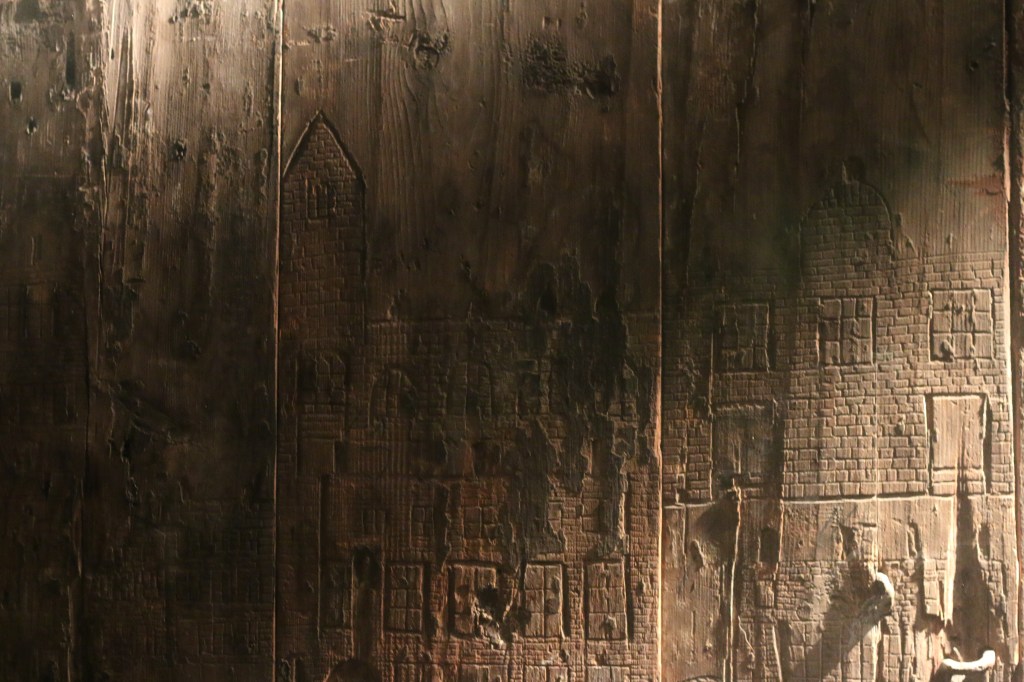
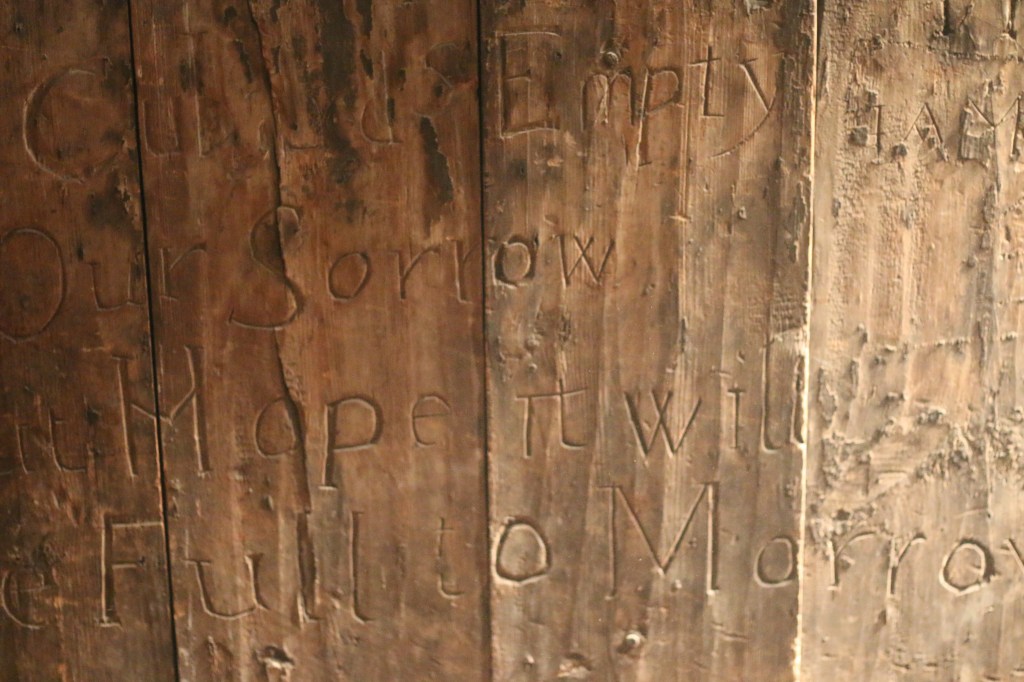
Museum of London description – Wellclose Square prison cell , c1750. This prison cell formed part of a small courthouse and house of detention, situated just to the east of the Tower of London. Many of the prisoners were insolvent debtors. To pass the time of day, they scratched their names, words, dates and images onto the cell’s wooden walls.
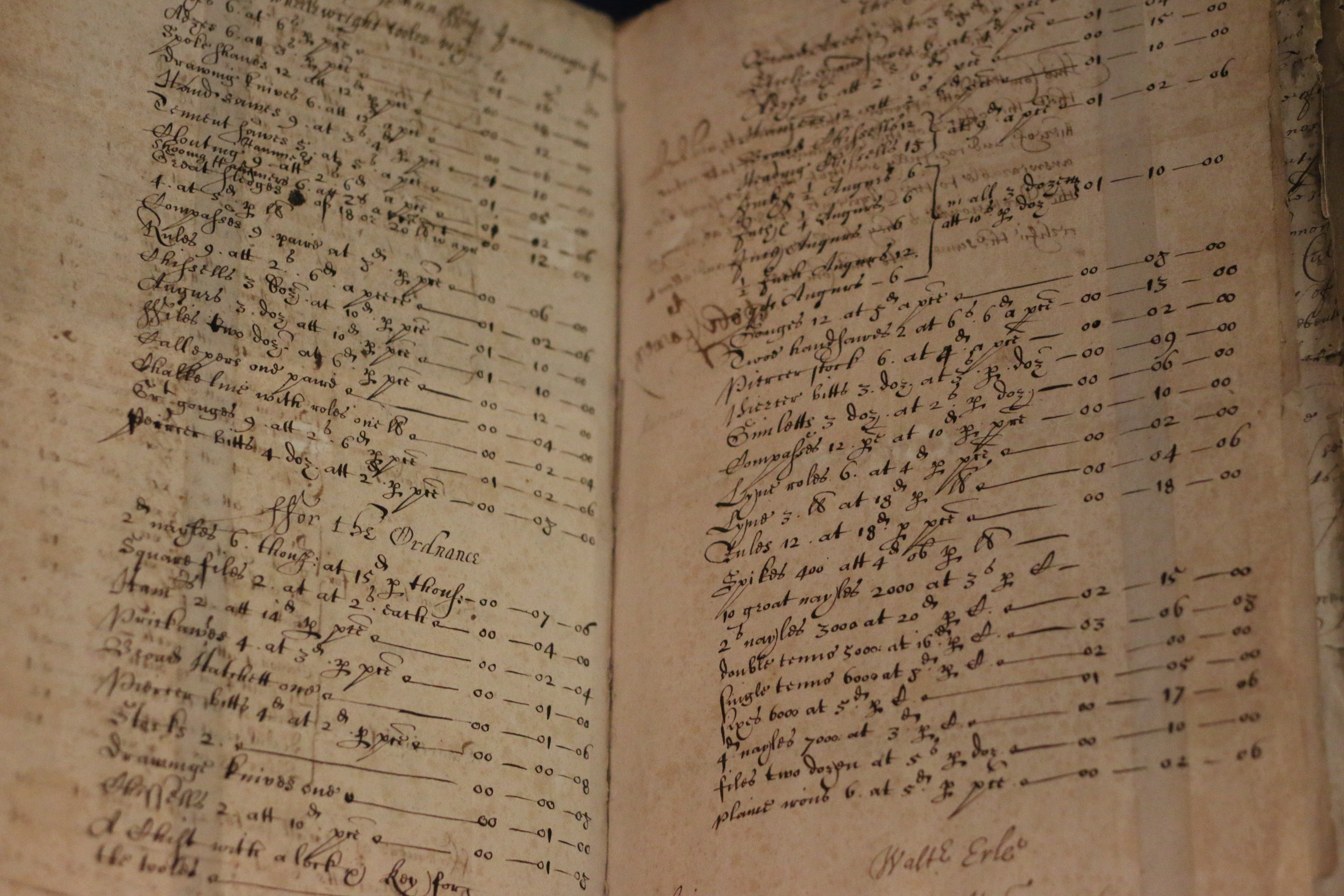
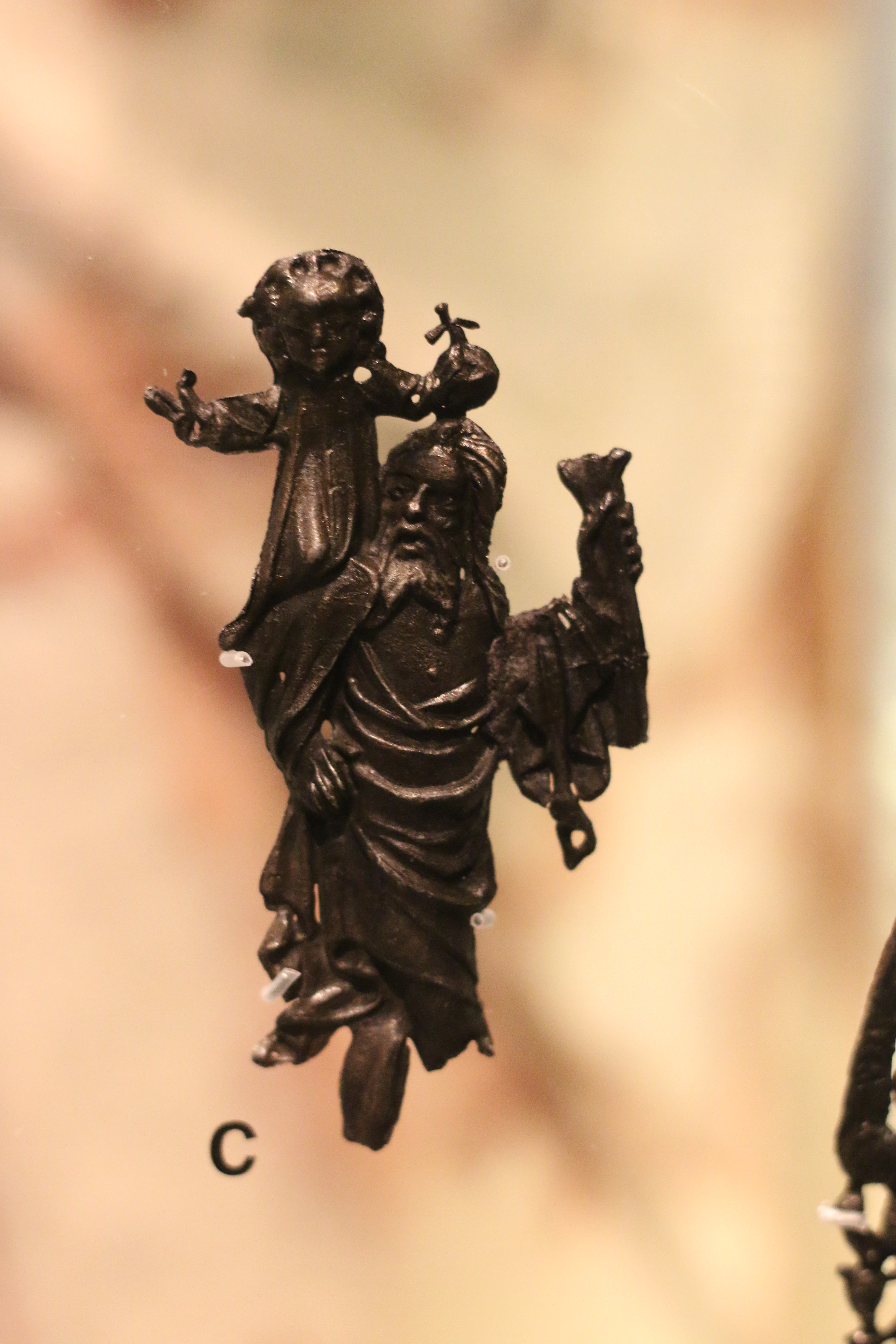
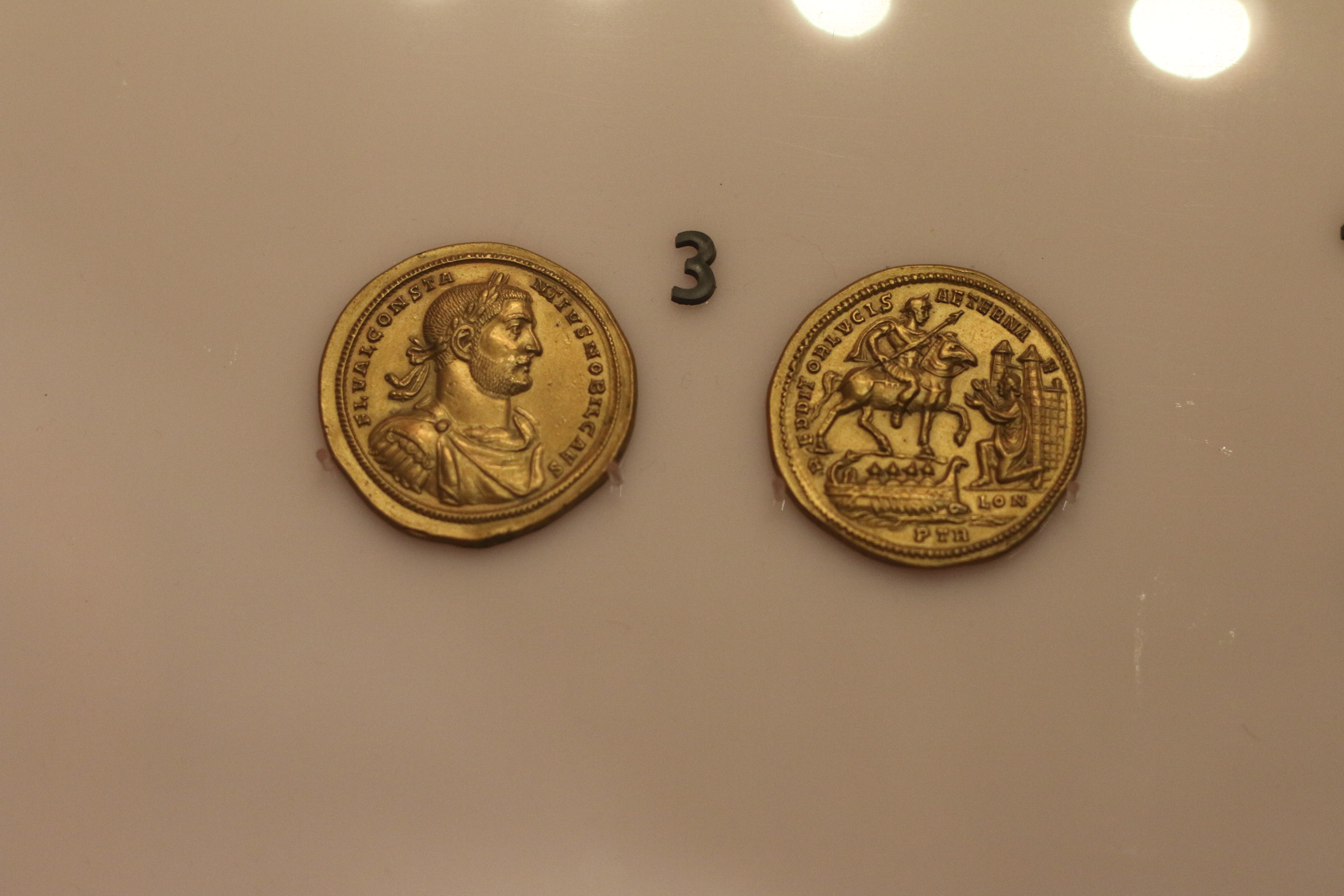
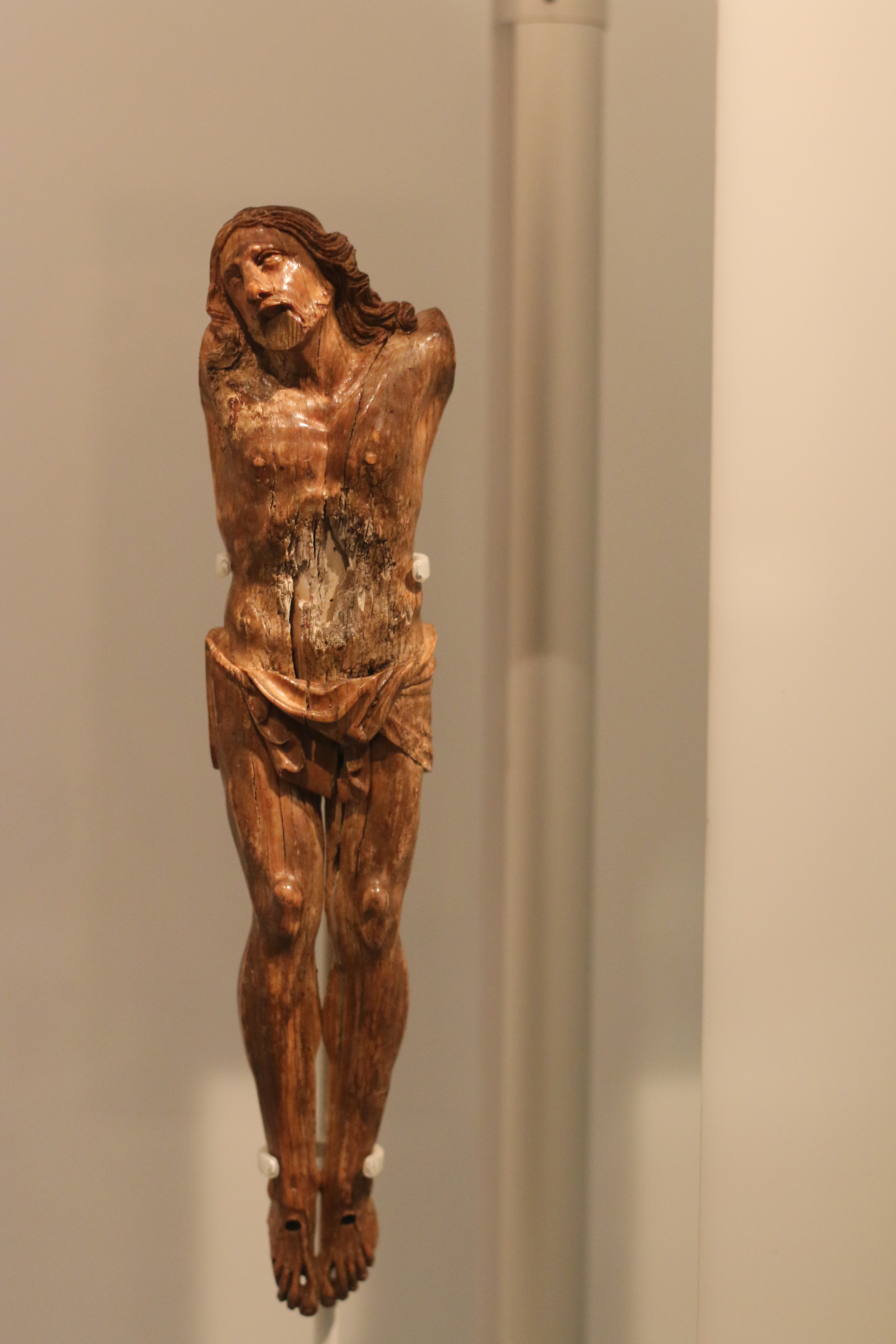
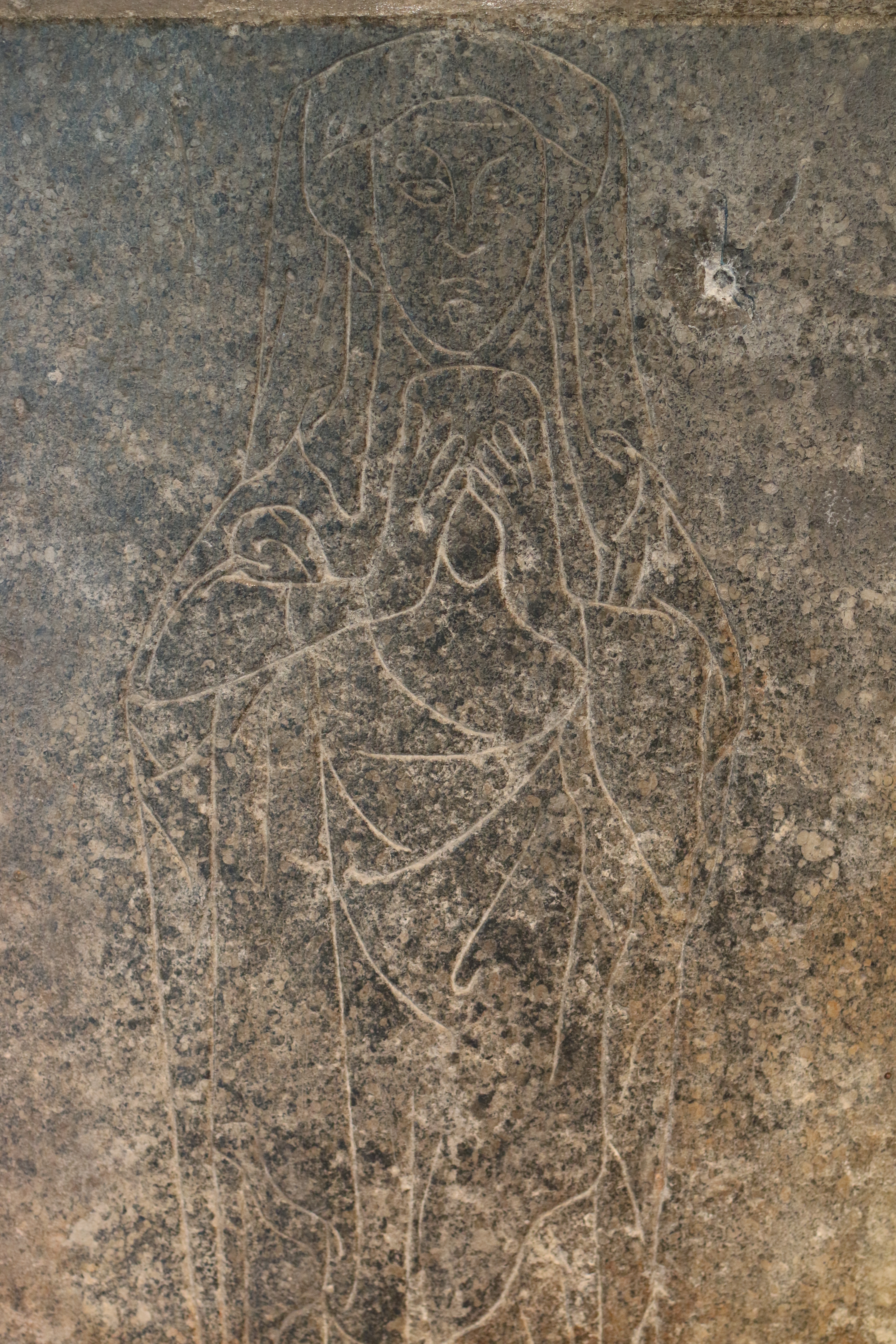
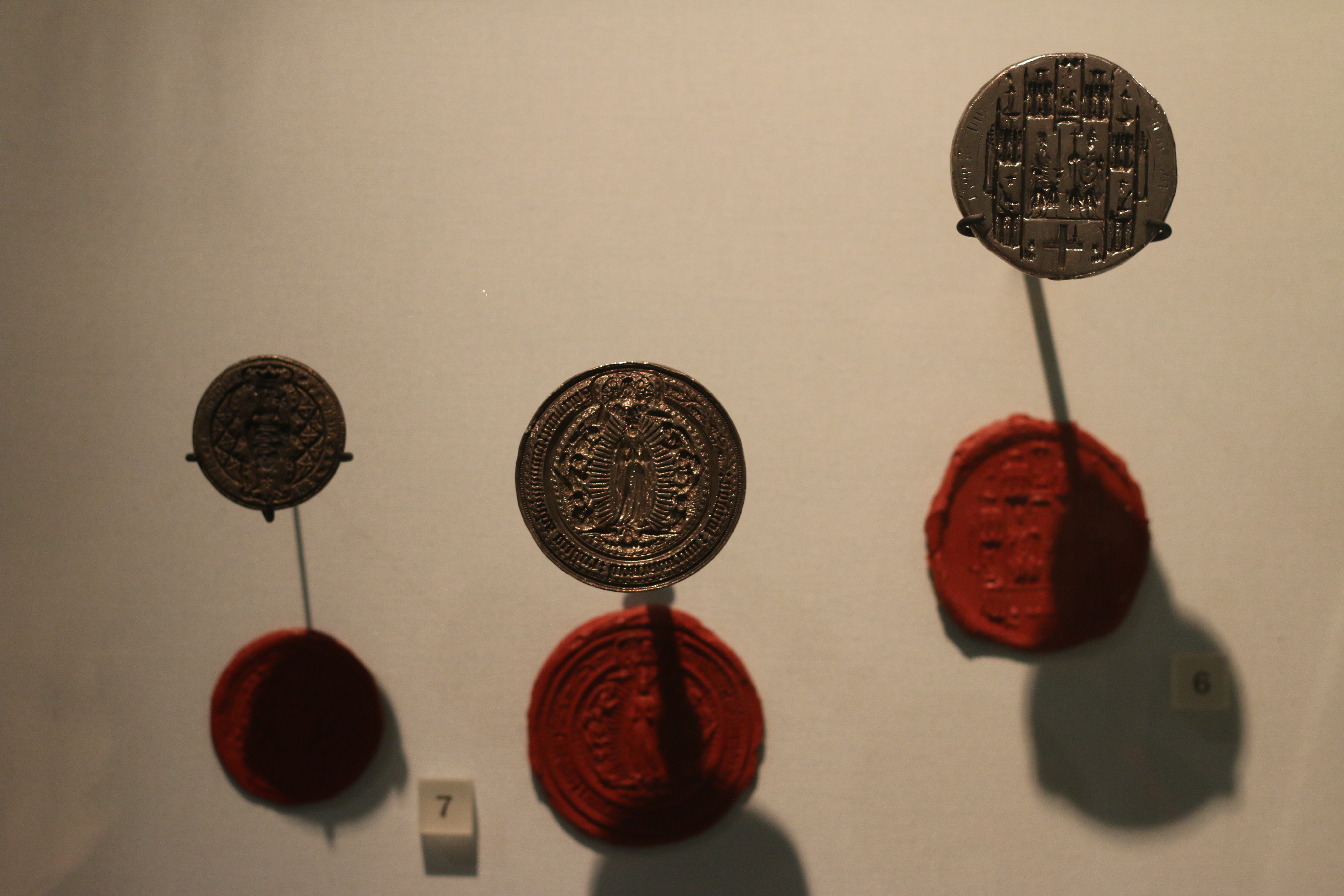
A few other pieces I was inspired by.
 Yash's Blog