Appearances become Apparitions
Research on artists who have worked with frottages and surrealism.
Max Ernst
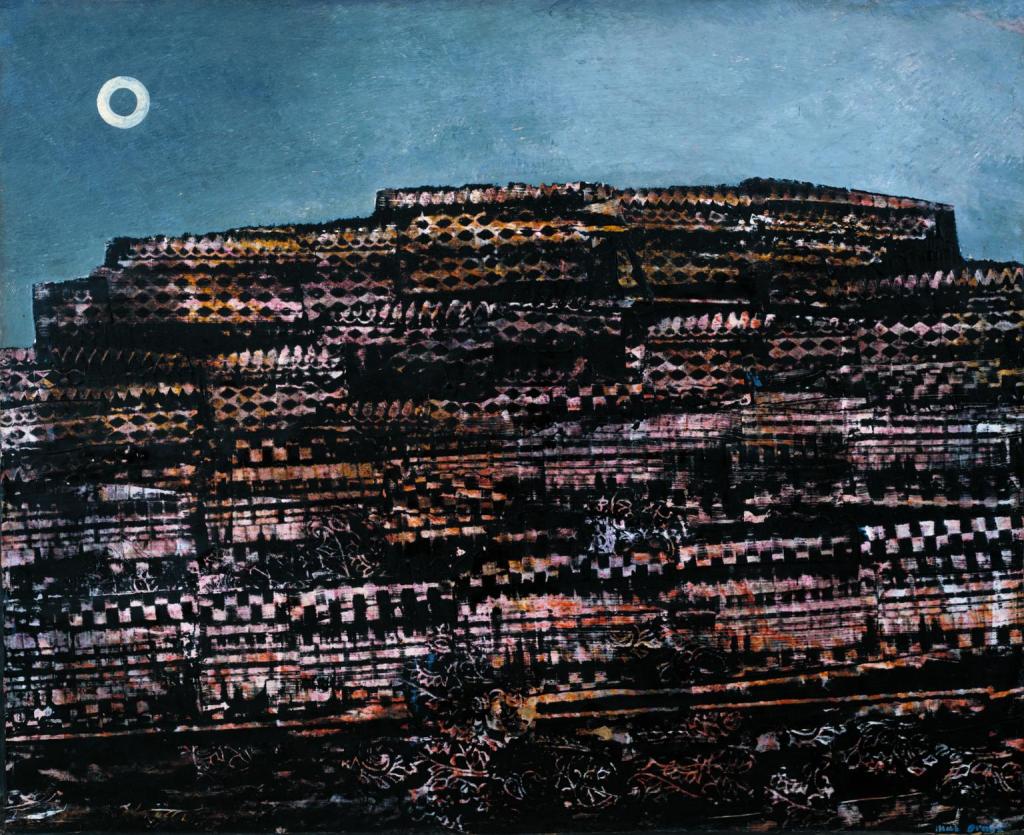
With frottage, Max Ernst proposed a semiautomatic drawing technique that could invoke the imagery of the unconscious while relinquishing the conscious use of the hand. He used frottage consistently from 1925 on to create his own realm of fantastical figures and reverberating landscapes. Although the artist claimed that they were made without forethought, they are in fact carefully configured compositions of rubbings.
Henri Michaux

Henri Michaux, the most prolific exponent of the technique in France aside from Ernst, evolved a looser and more spontaneous form of frottage. He approached the practice as a conduit to a parallel reality, much as he did his automatic writing and use of the hallucinogen mescaline. He experimented with it in an almost hypnotic manner, rubbing Conte crayon over textured objects or materials on page after page of his sketchbooks.
Jindřich Štyrský
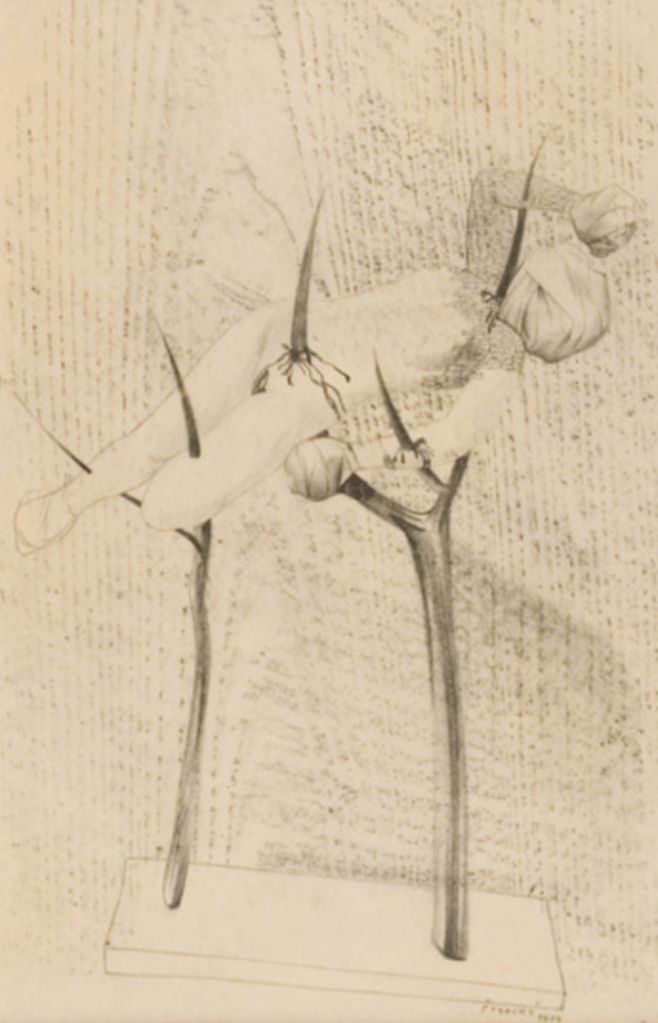
Czech artist Jindrˇich Štýrský combined frottage with collage and other mediums to record his fetishist dreams.
Anna Barriball
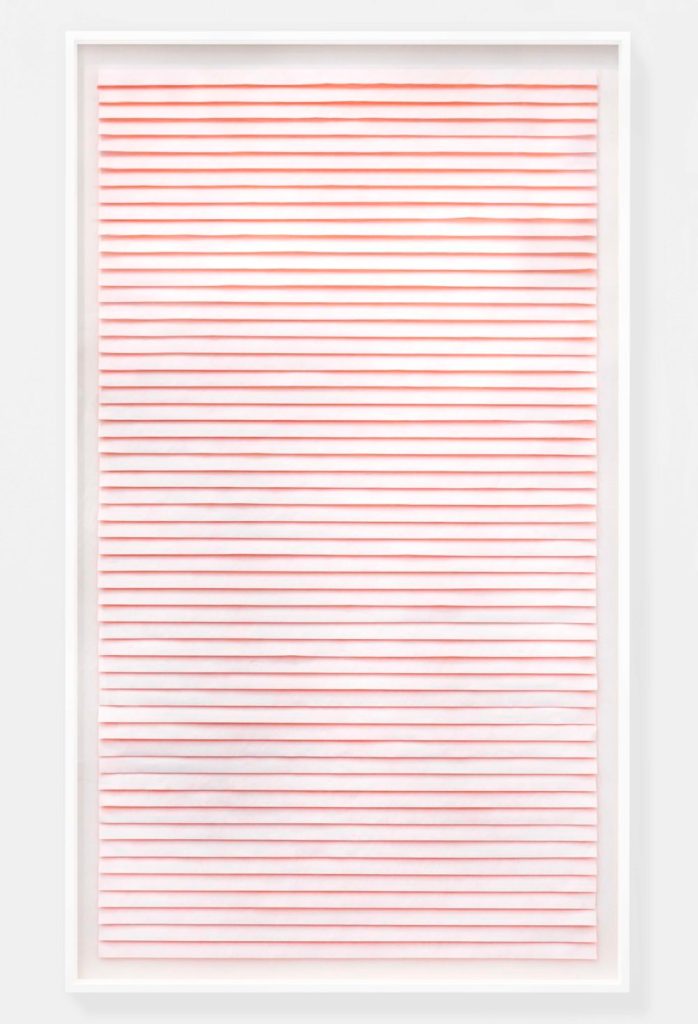
In a window-based piece, Barriball has created a collage of strips of paper painted with white ink, while the reverse of the strips are coloured with fluorescent pencil. Here with the simplest of means the artist evokes light shining through closed venetian blinds.
Glenn Ligon
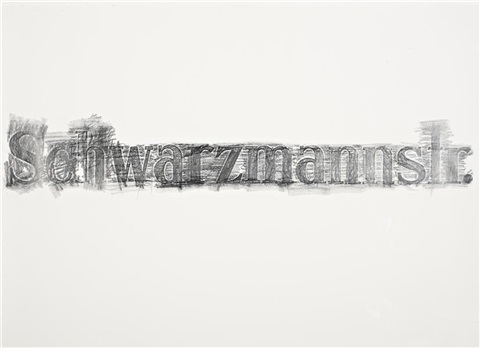
Glenn Ligon’s Schwarzmannstrasse, 2001, is a rubbing of a sign for a street in Munich that translates to “black man’s street.” In this work, the artist records a history of place that is tied to his own and, in doing so, emphasizes what may be overlooked and perhaps invisible to another viewer. Through the indexical traces of all these explorations, there emerges the imprint of the artist’s identity.
Heidi Bucher
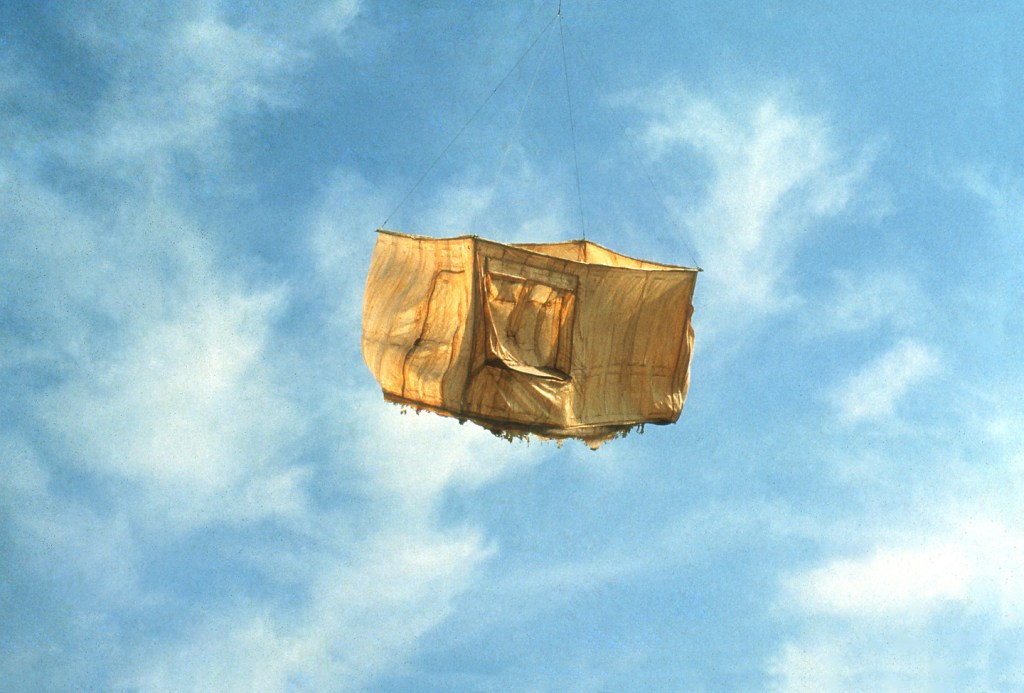
Renowned for her latex casts of room interiors, objects, clothing and the human body, which Bucher herself referred to as Häutungen (skinnings), her work process has often been thought of as a break from her past, whilst at the same time preserving haunting manifestations of it. To make her skinnings, Bucher first covered a surface with gauze before applying successive layers of liquid latex to it. The peeling-off process was usually a dramatic and performance-like stage of the work which was very important to Bucher. It required extreme technical, physical and mental rigour and conviction, and could only be done once Bucher deemed the latex to be sufficiently dry.
Adriena Šimotová
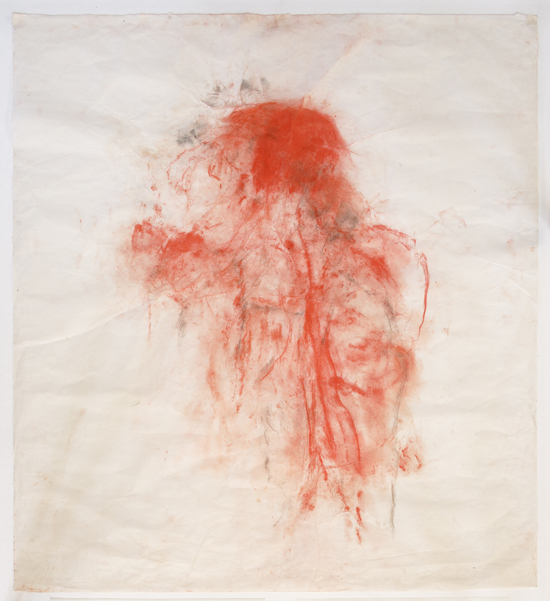
Czech artist Adriena Šimotová’s figures are afloat and groundless, yet poignantly present through their human scale and the aggressive gesture of their making. She said of her work, “I merely try to capture that almost uncapturable point at which something still exists, but is at the same time dying.”
Alighiero Boetti
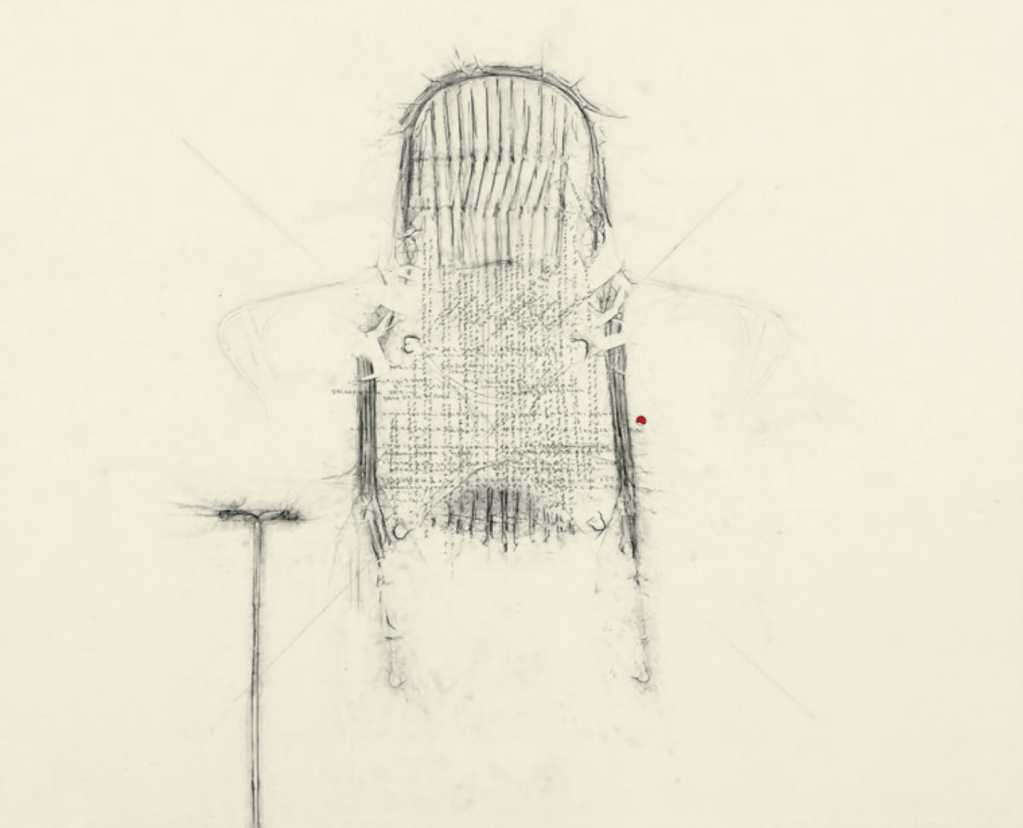
Alighiero Boetti’s eerie rubbing of an empty wicker chair emphasizes the absence of the sitter, although the artist’s presence is felt through the wiry description of his belongings.
Simryn Gill
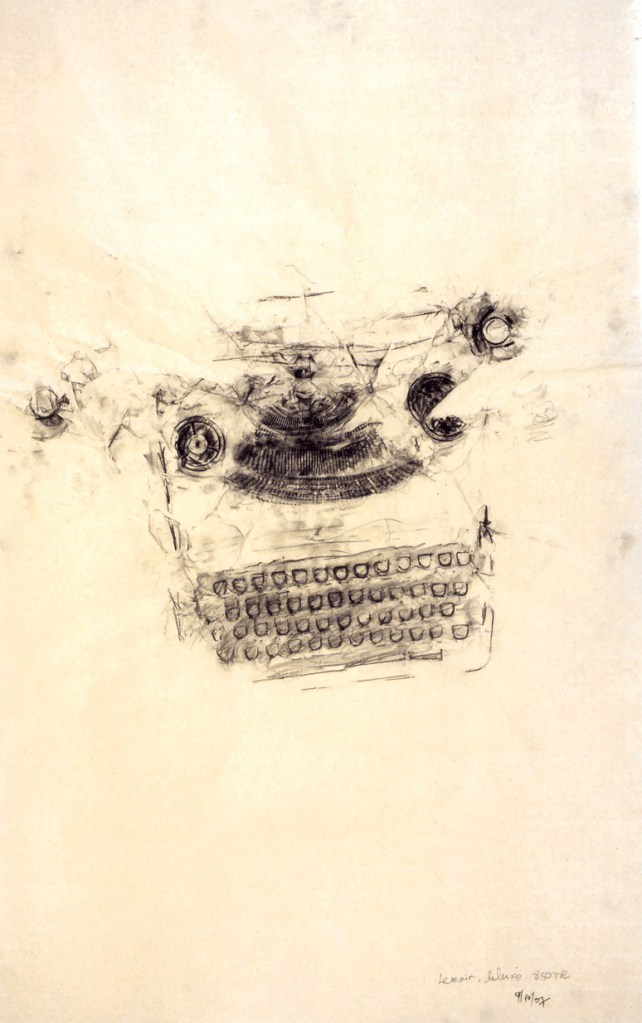
The three works of Caress are the traces of typewriters – made by placing sheets of paper over the machines and rubbing them with graphite. Here, Gill has made the machine passive – the marks on paper are of the machine rather than by the machine. The rubbings are like death masks of each typewriter, a final tribute to their passing in the electronic age.
Rob Swainston
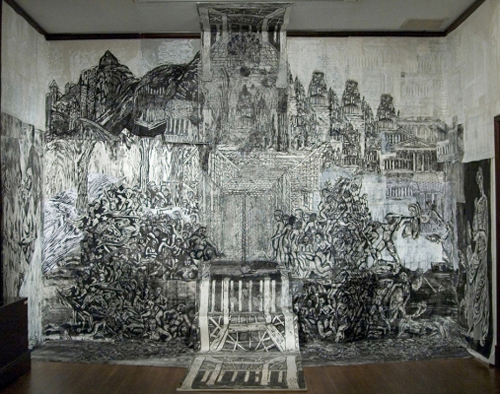
These pics are of a large-scale woodcut/silkscreen piece called Portapocalypse- a portable apocalypse constructed from components that can expand or contract to fill different spaces.
Masao Okabe
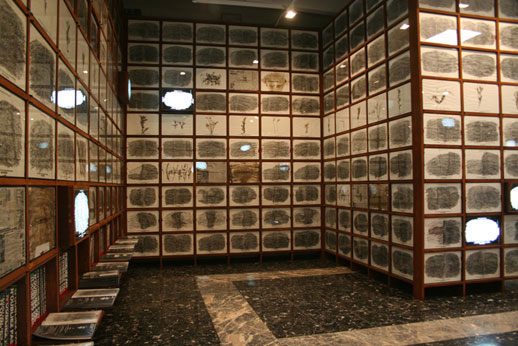
Masao Okabe displays 1,400 frottages from the port of Ujina in Hiroshima, as well as a 16 meters long row of frottages from the platform of the Ujina railway station with traces of the atomic bomb explosion. The station was removed in 2004 to make space for the construction of a new road.
 Yash's Blog