I chanced upon the Watkins Bookstore while searching for vintage goods. This bookshop specialises in new, second hand and antiquatarian titles in the mind, body and soul field.
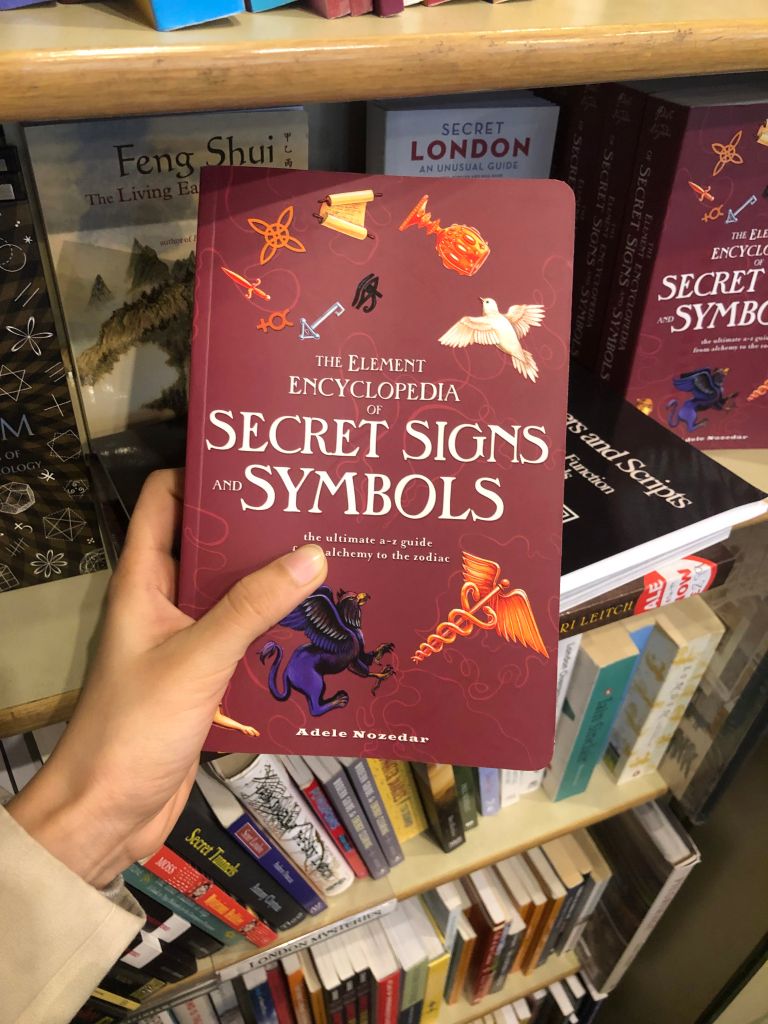
The following are some excerpts that I derived from a book there which is relevant to work in the Navigators project.
White
Symbolic Meanings: purity, virginity: death and rebirth, a beginning and an end; in the Far East, mourning.
White is both the absence of colour and the sum of all colours together, so in a senseit can mean everything or nothing. This combination of all colours has given white the name of the “many coloured lotus” in Buddhist teachings. Probably the most telling of both ends of whites’s symbolic spectrum are reflected in its associations with purity and a fresh start and as a colour of mourning in the East, a use that used to be common in Europe, too. Cadavers all over the world are still wrapped in white shrouds and, as death precedes birth, the white here has an optimistic meaning, since in this instance, white symbolizes rebirth. White is also used to denote initiation, another form of rebirth.
White is the colour of expectation and contains all the potential of the blank canvas. The pristine glory of a fresh fall of snow makes the world look clean and pure but white shows up every mark, hence its usefulness in hospitals and clinical environments.
Black
Symbolic Meanings: night, the absence of light; mourning, sobriety, denial; authority; perfection and purity; maturity and wisdom.
Although it’s the opposite of white, both shades are in fact, due to an absence of colour, and technically speaking black is not a “colour” at all. This doesn’t stop it having a wealth of symbolic meaning.
Black often has a negative connotation for the reason that it is the colour of the night, or the absence of light. It does not require a great leap of the imagination to extend this light/dark, day/night symbolism to good and bad. A fundamentally natural occurrence to do with the orbit of the Earth around the Sun, therefore, has had far-reaching consequences, resulting in fear, racism, superstition, and bigotry which even continues today simply because of the skin colour.
In the West, black is the colour of mourning and funerals, In some cultures, white is used in this context, in which case it carries the idea of rebirth, Black, however is not so sanguine. It is final, conclusive, the denial of life.
A person who holds a black belt in any of the martial arts is considered to be at the pinnacle of their abilities, and indeed, in Japan, black is the colour of wisdom, experience, and maturity. In this instance, black is a colour of perfection, an idea shared by the cathars who also saw black as a symbol of completion and purity. Black is a secretive, mysterious colour and used as such in rite and ritual, A polished black mirror provides a perfect, glossy surface for scrying or seeing into the future.
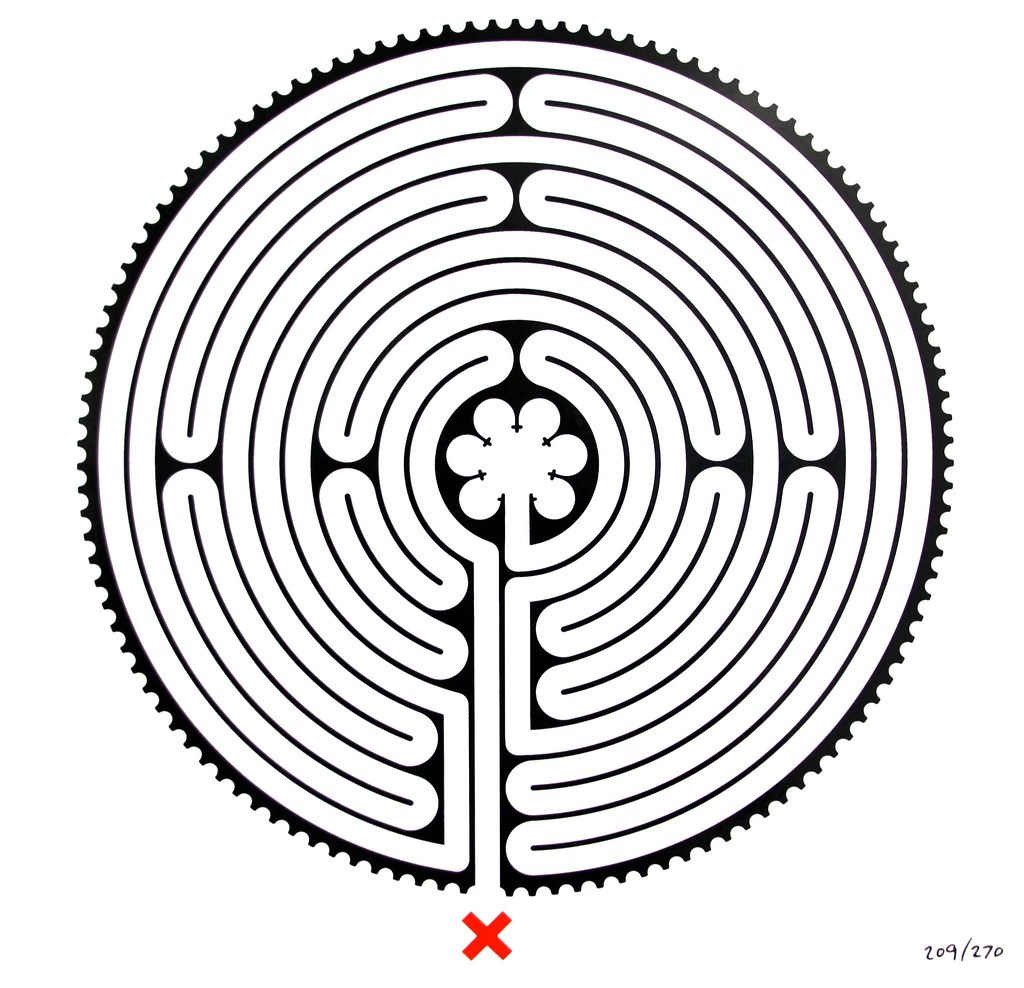
Labyrinth
The earliest recorded instance of the world “labyrinth” is in the descriptions of the labyrinth that housed the minotaur in Greek myth. The name means “house of the double axe”, a reference to the Labrys that was a powerful emblem of the Minoan culture. Although the labyrinth and the maze are often referred to as the same thing, a maze has a lot of different paths including branches that lead to dead ends, whereas a labyrinth has only one winding path that leads ineffably to the centre and offers no possibility of choice. The space available within the labyrinth is used ingeniously to ensure that the path is as long as possible.
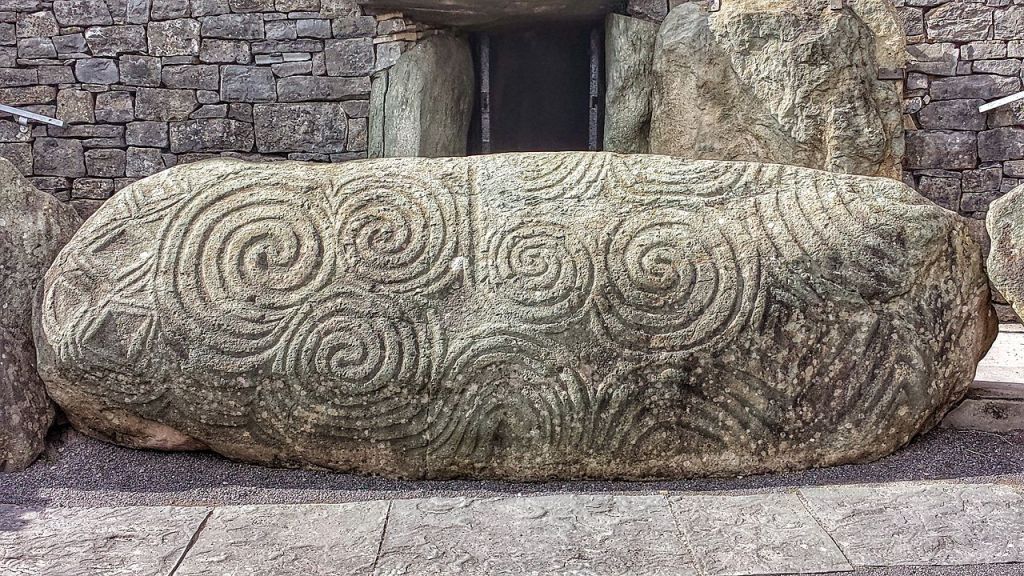
The most significant symbolism of the labyrinth is that of the journey of the soul to its center and then back toward the outside once more, the cycle of death and rebirth, a metaphysical pilgrimage of the spirit. The center of the labyrinth represents the womb, and to reach the center of the “labyrinth of life” is initiation and enlightenment. In this sense the labyrinth has parallels with the mandala as well as with the spiral patterns of the Celts, a good example of which can be seen on the massive stones in front of the entrance at Newgrange in Ireland.
Labyrinth patterns are universal, and earlier than the mythical labyrinth, They appear on the fragments of amulets from ancient Egypt, on Mycenaean seals, and on Etruscan vases.
Labyrinth patterns were first adopted by Christian churches, the earliest of which is in Algeria at the Repartus Basilica, dating back to the year 324. There is generally held to be significance in the number of concentric shapes or layers of the path, and also it’s length; the famous labyrinth at Chartres Cathedral, for example, has 11 concentric circles and is exactly 666 feet long. Because the number 666 is usually misconstrued as having evil origins, this has led to some wild conspiracy theories about the designer of the labyrinth, but 666 is a sacred number, the number of humankind. In the center of this particular labyrinth is a six petaled flower that conceals the hexagram or Seal of Solomon within it, as a reminder that labyrinths are sometimes called Solomon’s Maze.
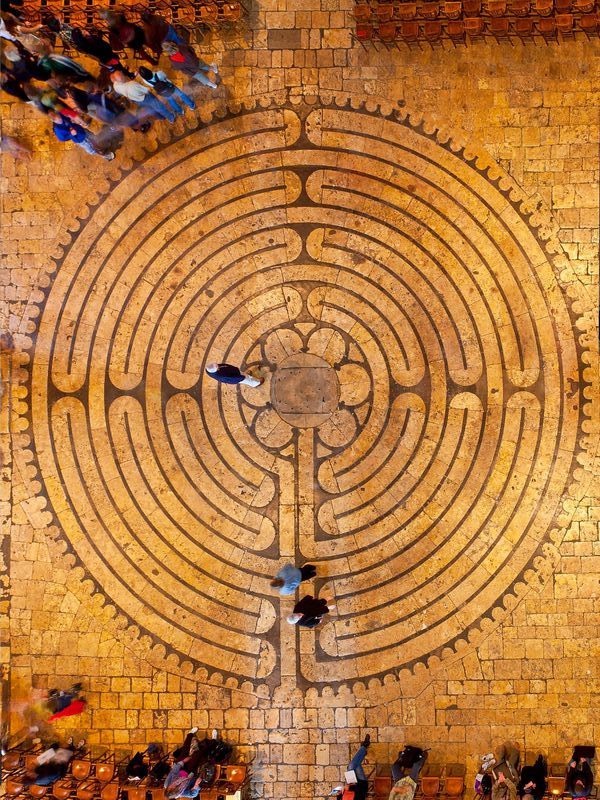
Because the winding trail of the labyrinth moves both in a clockwise (desoil) and an anti-clockwork (widdershins) direction, it symbolizes the course of the Sun and the waxing and waning of the Moon.
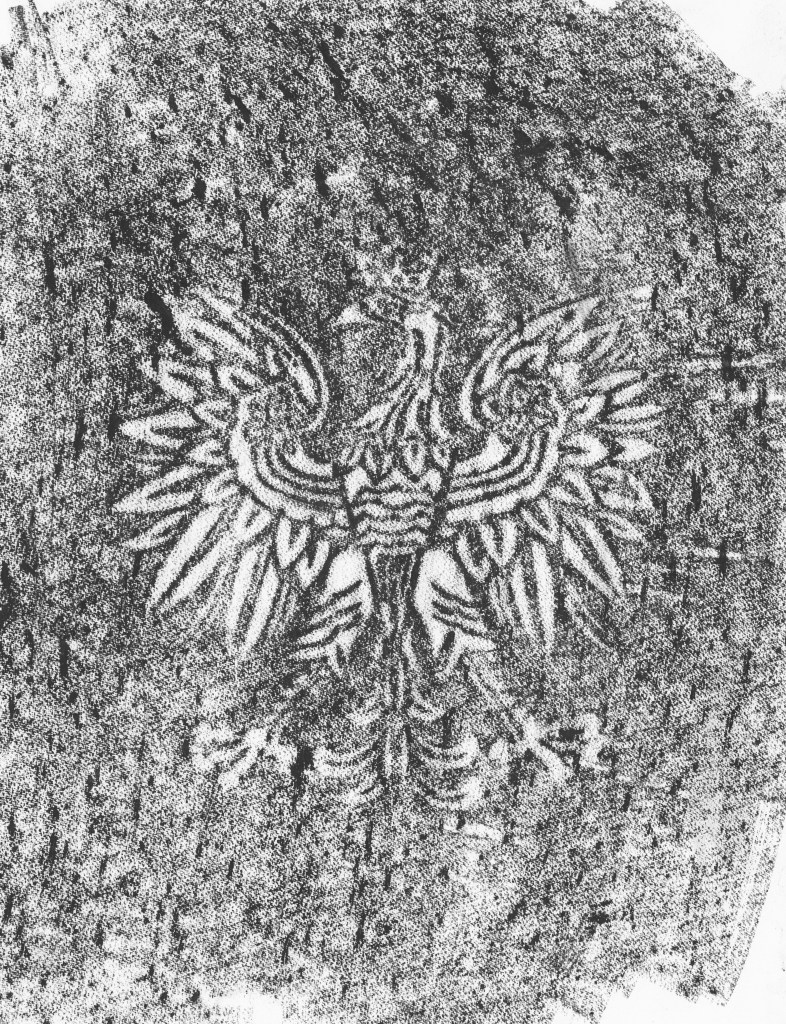
Phoenix
The mythological bird called the phoenix exists under different guises: as the Garuda in India, as the Feng Huang in China, as the Ho-oo in Japan, and the Benu Bird in Egypt. The main characteristic of this great bird, whose symbolic meaning resonates throughout myth, religion and alchemy, is that it is reborn from its own ashes after com busting voluntarily. this unusual habit means different things to different people. To Christians it is the reminder of the sacrifice made by Christ and his subsequent reward of resurrection and eternal life. For the dharmic religions, it indicates the triumph of the soul over the body, and the subsequent reincarnation. For others, the destruction by fire signifies the catharsis, or purification, of death.
The phoenix is also symbolic of the “dying” of the Sun as it goes over the horizon in a welter of flames, and its “resurrection” the next day as it burns back over the horizon. this was the favoured imagery of the Egyptians.
The phoenix is said to live primarily on aromatic smoke, not harming anything in order to eat. Therefore it is popular symbol in Chinese and Indian Buddhist belief systems. In the same way, the bird has become popular in Christian literature and art as a symbol of resurrection and of life after death. There can only exist one phoenix at a time, and its lifespan is reputedly anywhere between 500 and 1461 years. Its habitat is also debated. Some accounts say that it spends its time in India, but there’s also a tale that tells us that the birds real home is in Paradise. When the time comes for the phoenix to die, he has to fly into the mortal world, taking a journey across the jungles of burma, across India, and onto Arabia. here it collects the herbs and aromatic spices it needs, it then flies on to Phoenicia in Syria, finds a tall date palm tree, and then constructs its funeral pyre. As the next day dawns the bird rises again.
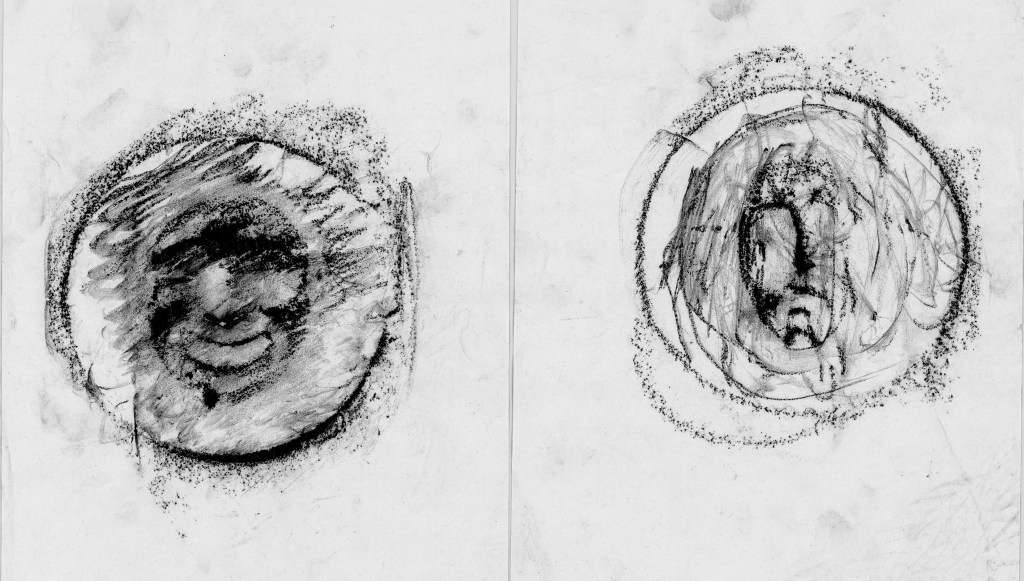
Mask
A mask covers the face of the individual, effectively blocking out his or her identity and replacing it with the spirit or personality represented by the mask. Many people who has worn masks describe the ease with which their own personality dissolves when the face is hidden or disguised. There are three main categories for the use of masks: in theatres, in carnival, in funerals. In addition, shamans use masks to help them take on the spirit of an animal or a deity.
In Ancient Greece and Rome, the Chorus was the name given to the actors who described the events taking place. They wore masks that represented archetypal human emotions; the classical “comedy” and “tragedy” masks come from this tradition. Similarly, the masks of the Japanese Noh Theatre convey archetypes: old man, young girl, mother, father, for example.
 Yash's Blog