Inspiration
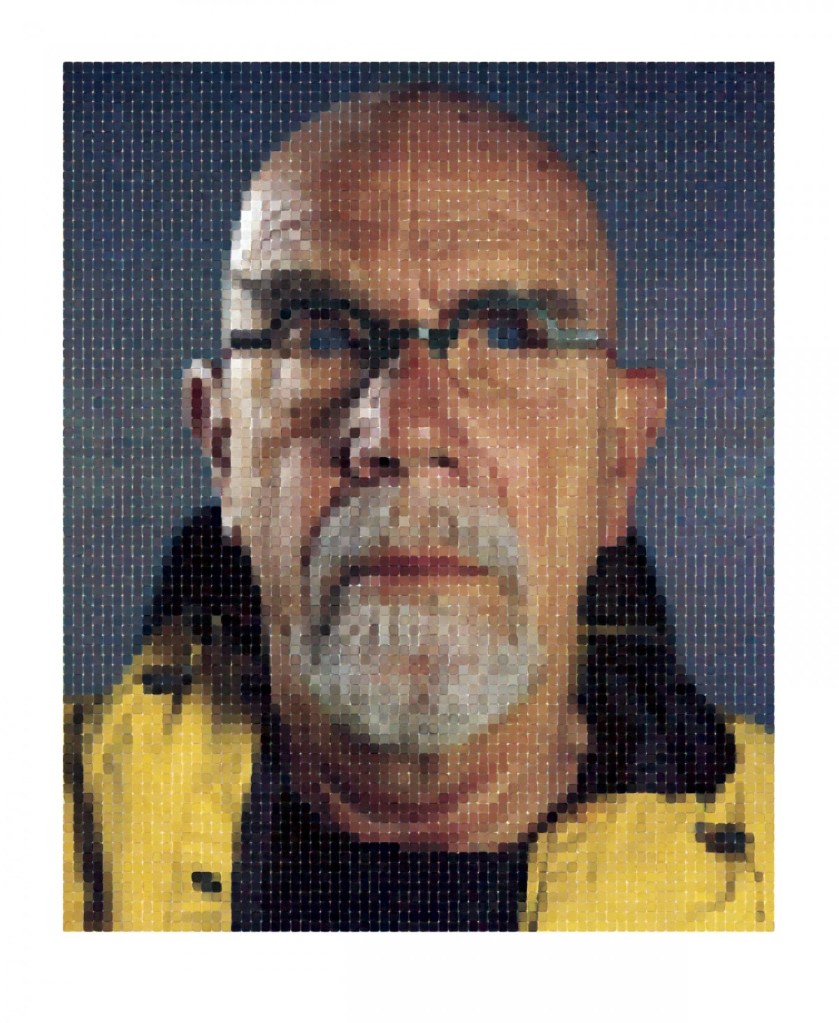
Since the late 1960s Chuck Close has been concentrating on portraiture and the human face in painting and photography and is one of the most celebrated artists working today. Close often takes his family and friends as models, making monumental and classical works that are both bold in their simplicity as well as intangible, since the images appear as if they have been viewed through a thick layer of glass or are rippling on the surface of water. In this way, the subjects of his paintings can seem like apparitions, dissolving and resolving when viewed from different distances.
Although Close has employed various painterly styles throughout his career, including an intense neo-realism in the 1970s and a shadowy Pointillism in the 1980s, he is perhaps best known for his more recent works which are made up from a shimmering, fragile grid set on the diagonal. Close’s paintings are all-over images where the background of the picture – the negative space – is as important as the face itself and one cannot exist without the other. Likewise, in Close’s daguerreotype photographs, the background defines the limit of the image plane as well as the outline of the subject, with the inky pitch-black setting off the light, reflective quality of the subject’s face. Close’s method of painting is always indexical, an incremental process whereby associative colours and shapes build up a pictorial syntax and a recognisable figurative whole. Warm colours are set against cold, circles against squares and the organising principles of the grid are constantly broken by minute areas of expressive abstraction.
https://whitecube.com/artists/artist/chuck_close
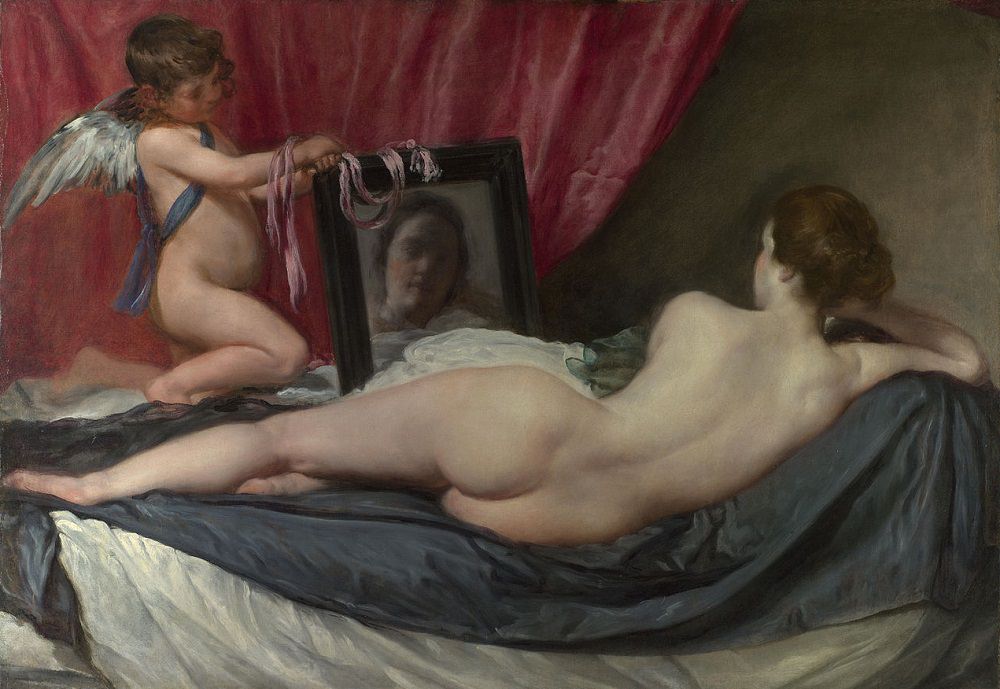
Velazquez’s Rokeby Venus is another inspiring piece. Here we can see the woman looking at herself in the mirror. This mirror is like the magic mirror we see in the movies. She is actually looking at her future self through the mirror. Another important aspect of the painting is how Velazquez painted this using his direct line of sight. If we see the extreme right and left of the painting, the woman’s left feet and right arm is distorted. The ribbon on the mirror was most likely to have been painted much after the painting had started drying.
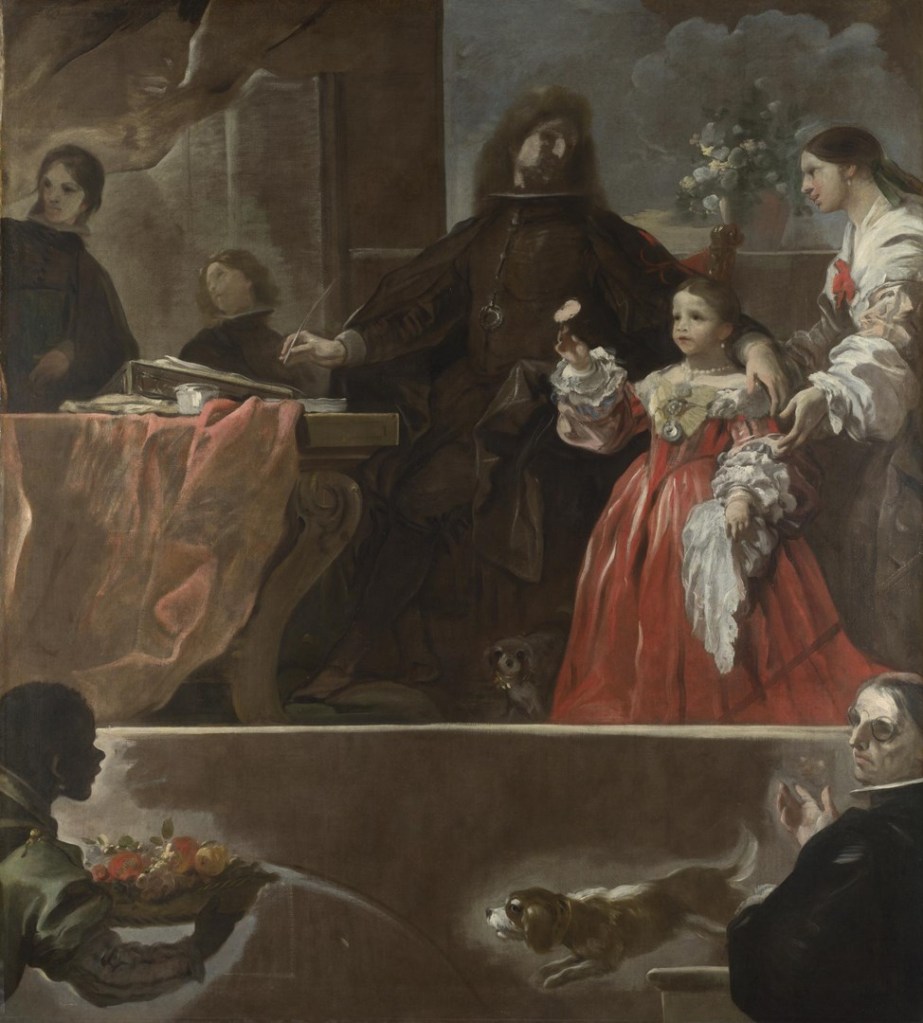
Luca Giordano’s painting, ‘A Homage to Velazquez’
One can see a Princess Margarita touching a flower or maybe she is painting from the other side of the painting.
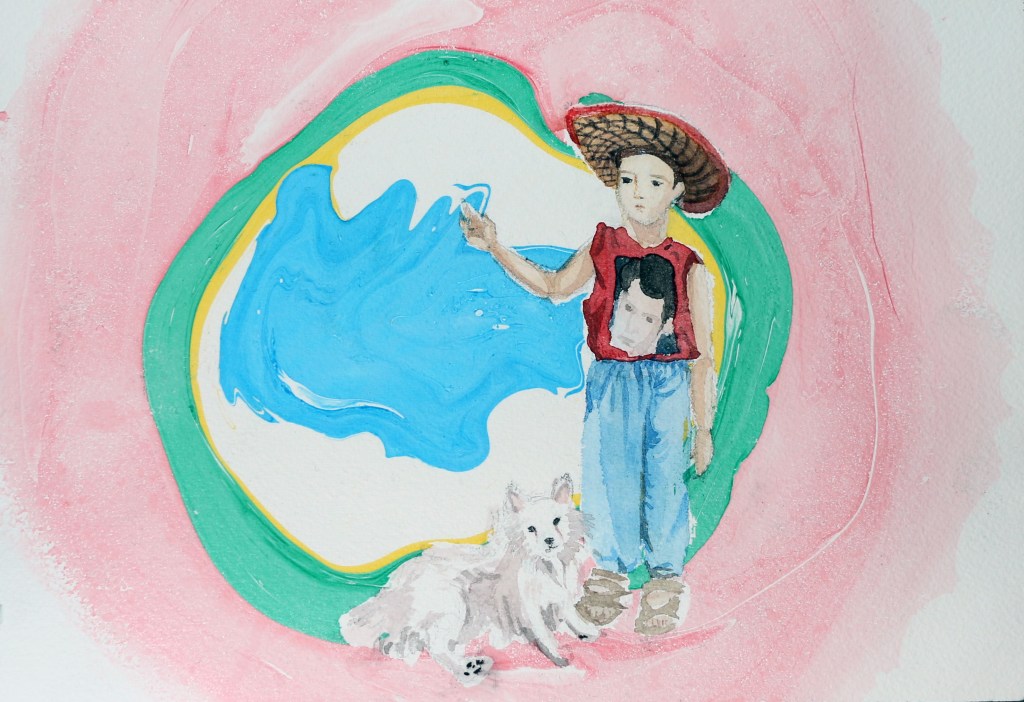
One of my experimental pieces for the artefacts project was inspired by this painting. Here I have explored the idea of a painting being an imaginary piece of glass.
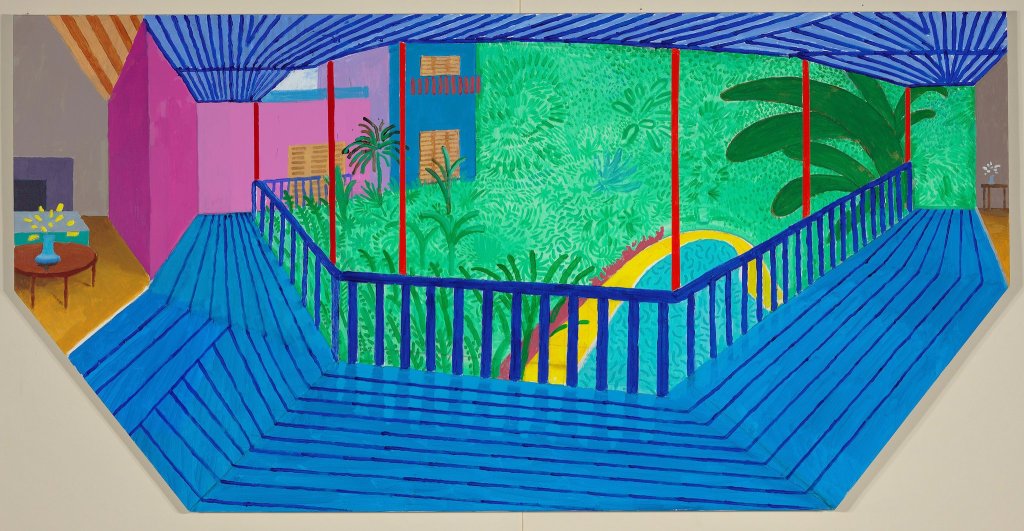
David Hockney landscapes were really inspiring especially the distorted yet panoramic landscapes and architecture he creates.
In Lawrence Weschler’s catalogue essay, Hockney suggests what he means by reverse perspective by way of an allusion to an experience he once had coursing through the arrow-straight eighteen-kilometer St. Gotthard Pass road tunnel, the tiny pinpoint of light ahead epitomizing “the hell of one-point perspective.” “I suddenly realized,” Hockney tells Weschler, “how that is the basis of all conventional photographic perspective, that endless regress to an infinitely distant point in the middle of the image, how everything is hurtling away from you and you yourself are not even in the picture at all. But then, as we got to the end of the tunnel everything suddenly reversed with the world opening out in every direction … and I realized how that, and not its opposite, was the effect I wanted to capture.”
https://www.theparisreview.org/blog/2018/04/16/david-hockneys-improbable-inspirations/
 Yash's Blog