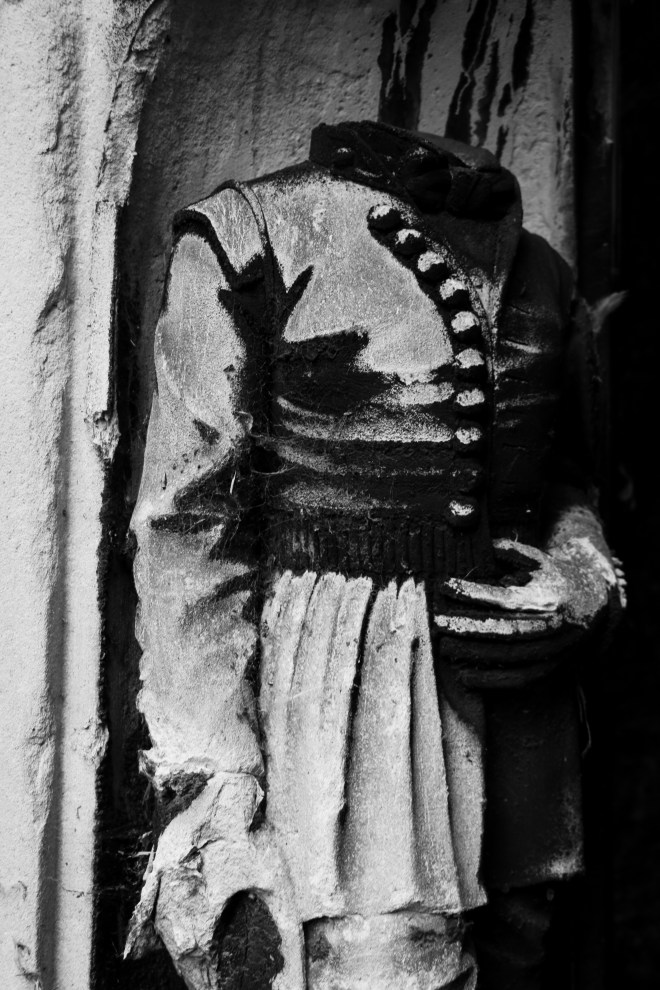
from the Brompton Cemetery
The ‘Navigators’ project was used to explore the universal spiritual journey experienced by man as he reaches the inevitable destination of death. The project raised fundamental questions about man’s search for purpose during this universal journey. The self-contrived nature of the task forced us to create our own purpose, to proactively find meaning and to construct our own definitions. Multiple dimensions of this project explored Victor Frankl’s timeless thesis, “The greatest task for any person is to find meaning in his or her life.”[1] The search for purpose was explored from an individual perspective. However, the project raised questions about the spiritual role of a city, and how/if it contributes to man’s search for purpose.
[1] Viktor E Frankl, Man’s Search for Meaning (United States: Beacon Press, 1959).
To explore the universal destination of death I visited two cemeteries, each providing a different insight into the role of purpose. Brompton cemetery illustrated how our lives are characterized by a process of proactively defining and redefining our identities in the search for purpose. Purpose is continuously explored through a theatrical theme. Using photographs and frottages I created images which narrated a story as well as capture the essence of the graveyard.
During the project ‘Investigation’ I tried to develop onto this idea and was taken back to the Brompton cemetery. One of the first gravestones showed four headless figures of a man. Each figure represented a different period in his life and the role he played in it, each marked by different costumes. Costumes are theatrical representation of purpose, each costume is a character playing a role in the broader performance and show. Thus, his search for purpose is embodied in his costumes.
All the world’s a stage,
And all the men and women merely players;
They have their exits and their entrances;
And one man in his time plays many parts.
Shakespeare also explores the idea of playing multiple characters and proactively searching for purpose.[2] The role of the theatre stage is to enable the ‘players’ to ‘play many parts’ and to achieve their purpose.
[2] William Shakespeare, As You Like It (London: S. Gosnell, 1810).

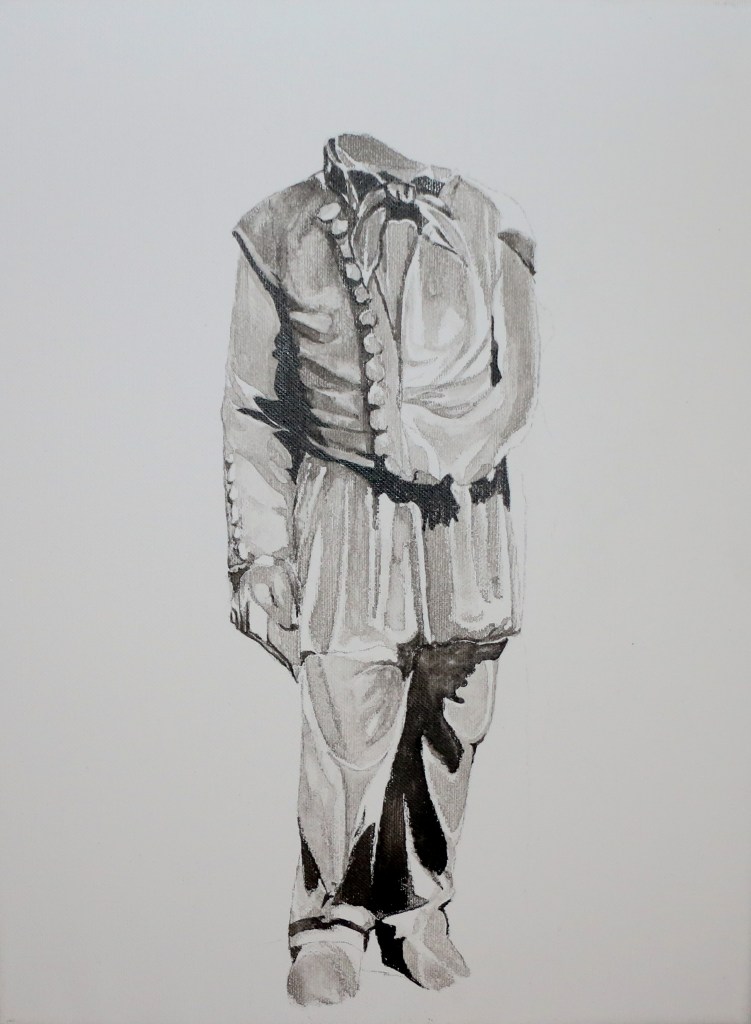


Ink on Canvas, 30cm x 40cm; Works in Progress

